
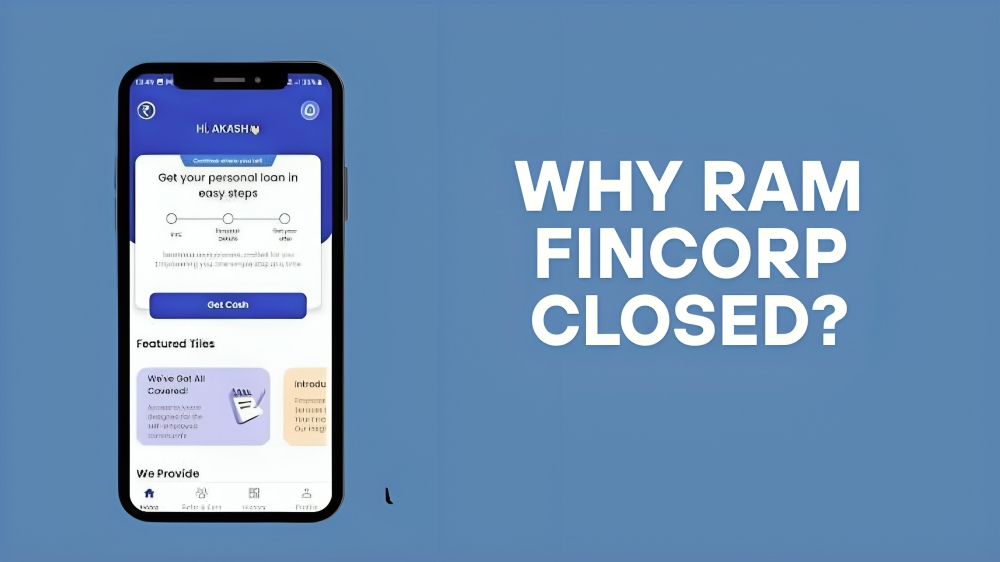
If you have ever typed “why Ram Fincorp closed” into Google late at night, worried about an unpaid EMI or a missing app icon on your phone, you are not alone. Thousands of borrowers found themselves in the exact same spot after the app vanished from the Play Store almost overnight. I personally spent days digging through user complaints, app-store archives, and RBI guidelines to understand what actually happened, and honestly, the story is messier than most blogs make it sound.
In this article, I will walk you through exactly why Ram Fincorp closed, what happens if you have not repaid your loan, how to repay a Ram Fincorp loan safely, and whether the whole thing was ever legitimate in the first place. Let’s get into it.
The Quiet Disappearance That Left Thousands of Borrowers Confused
Ram Fincorp operated as a digital lending brand associated with R.K. Bansal Finance, offering small-ticket instant personal loans to salaried individuals across India. For a while, it looked like just another quick-loan app promising disbursal within thirty minutes. However, the app was pulled from the Google Play Store, and its digital footprint shrank almost overnight.
I explored several app-analytics archives and found that the listing was officially marked inactive, with downloads freezing completely. That single event — a Play Store removal — is really the starting point for understanding why Ram Fincorp closed. Once an app loses its main distribution channel, new customer acquisition dries up almost instantly, and that is exactly what seems to have happened here.
What Was Really Driving the Backlash Against the App
After researching this deeply, I noticed a clear pattern across review platforms and community forums: the complaints were not random one-off incidents. They followed a consistent story of hidden charges, harassment, and confusion. Here is a breakdown of the core issues that repeatedly came up.
1. Disbursal Amounts Didn’t Match What Was Promised
Many borrowers said the amount credited to their account was noticeably lower than the sanctioned loan. For example, a person approved for a fifteen-thousand-rupee loan would sometimes receive only around thirteen thousand, with the difference quietly deducted as “processing” or “service” fees. Once you add compounding interest on top, the effective annual cost of these loans reportedly climbed into the 50-55% range for short tenures — numbers that would make anyone uneasy.
2. The Google Play Store Ban
Google has been actively removing predatory lending apps from India for a few years now, following government pressure and multiple tragic cases linked to loan-app harassment. Ram Fincorp appears to have been swept up in this larger crackdown. Once flagged for policy violations around fees, data access, or recovery conduct, the app lost its listing — and with it, its primary source of new customers.
3. Recovery Agents Crossed the Line
This is probably the most serious factor behind why Ram Fincorp closed its consumer-facing operations. Borrowers described daily calls, threats, and in some cases contact with their friends and family members — a tactic that RBI’s digital lending guidelines explicitly prohibit. As a result, several users reportedly sought legal notices or cease-and-desist letters just to get the harassment to stop.
4. Customer Support That Went Silent
Meanwhile, people trying to do the right thing — settle their dues or close their accounts properly — say they simply could not get a response. Payments were made, but confirmations never arrived, and accounts stayed open on paper even after being cleared. This created a frustrating loop where honest borrowers ended up looking like defaulters through no real fault of their own.
Is Ram Fincorp Real or Fake? Here’s the Honest Answer
This is probably the question you actually came here for. Based on available records, Ram Fincorp was linked to R.K. Bansal Finance, which claimed NBFC registration with the RBI. So, technically, the entity behind it does appear to be a real, registered lending business rather than a pure fraud shell—but that does not mean the app’s conduct was clean.
Whether Ram Fincorp is real or fake is a question worth separating into two parts: the company’s legal existence versus its business practices. The registration may be genuine, while the fee structure, disbursal gaps, and recovery behavior were the parts that drew real regulatory heat. In my experience researching similar instant-loan apps, this “real entity, unfair practices” combination is extremely common in India’s digital lending space.
Comparison: Reported Promise vs. On-Ground Reality
| Aspect | What Was Advertised | What Users Actually Reported |
| Loan disbursal | Full sanctioned amount | Amount reduced after fee deductions |
| Interest rate | Low and affordable | Effective APR near 50-55% |
| App availability | Always accessible | Removed from Play Store |
| Recovery process | Professional, RBI-compliant | Frequent harassment complaints |
| Customer support | Responsive helpdesk | Slow or unresponsive to closures |
What Happens If You Don’t Repay Your Ram Fincorp Loan
If you are wondering about ram fincorp loan not paid what happens, the timeline generally follows the same pattern used across India’s digital lending industry.
Days 1-90 (Early Default):
- Late fees, bounce charges, and penal interest get added to your outstanding balance
- Daily calls and SMS reminders from internal or third-party collection teams begin
- Your CIBIL or Experian score starts dropping as missed EMIs get reported
90+ Days (NPA Stage):
- RBI norms require the loan to be classified as a Non-Performing Asset after ninety days past due
- A formal legal recall notice may be issued demanding the full outstanding amount, not just missed instalments
180+ Days (Write-Off & Settlement):
- The lender may mark the loan as written off internally, though the debt itself is not forgiven
- The debt could be sold to an Asset Reconstruction Company
- A One-Time Settlement may be offered, but a “Settled” tag on your credit report can affect your score for up to seven years
Therefore, ignoring the loan is rarely the safer option. Even though the app disappeared, the underlying debt obligation typically does not vanish along with it.
How to Repay Ram Fincorp Loan the Right Way
If you are still trying to figure out how to repay Ram Fincorp loan dues, here is a practical approach based on how similar digital lenders usually structure their repayment channels.
- Check the official website first. Even if the app is gone, the lender’s website or partner NBFC portal may still list an active “Repayments” or “My Loans” section.
- Use traceable payment modes. UPI, NEFT, or RTGS transfers are preferable to cash, since they leave a clear digital trail for future disputes.
- Match settlement letters exactly. If you are clearing a negotiated amount, only use the bank account details mentioned in your official settlement communication.
- Keep every receipt. Screenshots of loan agreements, fee deductions, and payment confirmations are your strongest protection if a dispute arises later.
- Escalate in writing. Emails create a paper trail; phone calls do not. Always follow up a call with a written confirmation request.
In addition, if you cannot verify a current repayment channel, avoid third-party “agents” who contact you out of the blue asking for payment through personal UPI IDs — this is a common scam pattern that piggybacks on the confusion left behind by app removals.
Protecting Yourself If You’re Still Being Contacted
Even though the app has gone quiet, some borrowers report ongoing calls from recovery teams. If that’s happening to you, here’s what tends to help:
- Document every call, message, or threat with timestamps.
- Send a written request asking for the outstanding balance in writing before making any payment.
- If harassment continues, file a complaint with the Banking Ombudsman or the National Consumer Helpline.
- Consider a formal cease-and-desist notice through a legal professional if contact becomes abusive.
On the other hand, if you genuinely owe the money, engaging calmly and negotiating a documented settlement is almost always better than going silent, since non-response tends to escalate matters faster.
Frequently Asked Questions
Q1. Why did Ram Fincorp close its operations?
A mix of regulatory scrutiny, a Google Play Store ban tied to policy violations, and mounting consumer complaints about fees and recovery conduct appear to be the main reasons why Ram Fincorp closed.
Q2. Is Ram Fincorp a licensed company?
The brand was linked to R.K. Bansal Finance, which claimed NBFC registration with the RBI. However, claimed registration does not automatically excuse unfair lending practices.
Q3. What happens if I stop paying my Ram Fincorp loan?
Expect penalty interest, credit score damage, possible NPA classification after ninety days, and eventually a settlement or write-off process, as outlined above.
Q4. Can recovery agents legally contact my family or friends?
No. RBI’s digital lending guidelines prohibit this. If it happens to you, it can be reported to the Banking Ombudsman.
Q5. How do I know if a payment request is genuine?
Only trust payment instructions that match your original loan agreement or an official settlement letter — never a random personal UPI request from an unknown “agent.”
Related Reads:
Kamakshi Money Loan: Features, Interest Rates, Pros & Cons
Kundan Finance: Loan Features, Eligibility & Application Process
Final Thoughts
After researching this deeply, the picture that emerges is fairly consistent: Ram Fincorp closed because of a collision between aggressive short-term lending practices and India’s tightening regulatory environment around digital loan apps. Moreover, the borrowers caught in the middle are left with real debts, a missing app, and understandable confusion about what to do next.
If there’s one thing worth remembering, it’s this: an app disappearing from your phone does not erase a financial obligation. Whether you’re trying to settle an old balance, dealing with recovery calls, or simply trying to confirm whether Ram Fincorp was ever legitimate, keeping documentation and using traceable payment channels will protect you far better than silence ever will. Finally, if you’re currently dealing with an active Ram Fincorp loan issue, it’s worth reaching out to a consumer helpline or legal advisor before making any further payments.